Historia: Her Deepest Secret (Su secreto más profundo)

- Intenta comprender la historia.
- Solo mira la traducción si te quedas atascado.
- ¡Compara los idiomas para aprender nuevas palabras y frases! Saber más
Escuchar en YouTube Leído por Fabulang
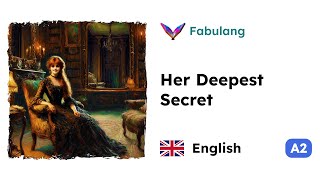
“There’s something unusual about this painting,” said the tour guide. “Can you see what it is?”
“Hay algo inusual en este cuadro”, dijo la guía turística. “¿Pueden ver qué es?”
The tourists looked closely. Behind them, other tourists walked around the busy museum.
Los turistas miraron atentamente. Detrás de ellos, otros visitantes recorrían el concurrido museo.
“It’s the paint. It’s thick,” a woman said, loudly. She was wearing sunglasses and a large hat.
“Es la pintura. Es espesa”, dijo una mujer en voz alta. Llevaba gafas de sol y un sombrero grande.
“It’s an oil painting,” said the tour guide. “That’s normal.”
“Es una pintura al óleo”, dijo la guía. “Eso es normal.”
“It’s not realistic. The colours are dull.”
“No es realista. Los colores son apagados.”
“It’s over three hundred years old. And you’re wearing sunglasses, madam.”
“Tiene más de trescientos años. Y usted lleva gafas de sol, señora.”
“Well, what then?” said someone else.
“Bueno, ¿entonces qué es?” dijo otra persona.
“The woman in the painting… no one knows who she is. But we can discover a lot about her, by looking closely. In fact, we can discover her deepest secret.”
“La mujer del cuadro… nadie sabe quién es. Pero podemos descubrir mucho sobre ella si miramos atentamente. De hecho, podemos descubrir su secreto más profundo.”
“She was very intelligent,” said the loud woman’s son. The boy let go of his mother’s hand and stepped forward.
“Era muy inteligente”, dijo el hijo de la mujer ruidosa. El niño soltó la mano de su madre y dio un paso al frente.
“Be quiet, Lewis,” said the mother. “You’re embarrassing me.”
“¡Cállate, Luis!”, dijo la madre. “Me estás avergonzando.”
“How do you know?” asked the tour guide.
“¿Cómo lo sabes?” preguntó la guía.
“She has so many shelves full of books. There is a desk in the room, with paper and ink. She likes to study.”
“Tiene muchas estanterías llenas de libros. Hay un escritorio en la habitación, con papel y tinta. Le gusta estudiar.”
“Very good!” said the tour guide. “The artist wanted us to notice those things. He’s telling us who she was.”
“¡Muy bien!” dijo la guía. “El artista quería que notáramos esas cosas. Nos está diciendo quién era ella.”
The other tourists nodded and looked impressed. The mother wasn’t looking.
Los demás turistas asintieron y parecían impresionados. La madre no estaba mirando.
“She loves to travel,” Lewis continued.
“Le encanta viajar”, continuó Luis.
“Lewis!” said the mother. She turned to the tour guide. “I’m sorry about my son. I can’t teach him to be quiet.”
“¡Luis!” dijo la madre. Se giró hacia la guía. “Perdone a mi hijo. No consigo enseñarle a estar callado.”
“I can see why that’s difficult for you,” said someone.
“Entiendo por qué le resulta difícil,” dijo alguien.
“Yes, he’s a very difficult child.”
“Sí, es un niño muy complicado.”
“Why do you think she liked to travel?” the tour guide asked Lewis.
“¿Por qué crees que le gustaba viajar?” preguntó la guía a Luis.
“The style of the room is European. But look around. The rug is Indian. That ornament is from Peru, I think. And the mirror looks —”
“El estilo de la habitación es europeo. Pero mira alrededor. La alfombra es india. Ese adorno es de Perú, creo. Y el espejo parece…”
“Do as you’re told, Lewis!” said the mother, closing her handbag. “We’re leaving.”
“¡Haz lo que te digo, Luis!” dijo la madre, cerrando su bolso. “Nos vamos.”
After Lewis and his mother had left, a man asked, “But what was the secret?”
Después de que Luis y su madre se marcharan, un hombre preguntó: “¿Pero cuál era el secreto?”
“Look in the corner.”
“Miren en la esquina.”
“Are those… children’s toys?”
“¿Son… juguetes infantiles?”
“Yes! But why did the artist paint those? He’s telling us the woman had a child – their child. Their love was a secret, but he wanted us to know. Now, please follow me…”
“¡Sí! ¿Pero por qué los pintó el artista? Nos está diciendo que la mujer tenía un hijo – su hijo. Su amor era un secreto, pero él quería que lo supiéramos. Ahora, por favor, síganme…”
“You must learn to be quiet!” the mother said to Lewis as they left the museum.
“¡Debes aprender a estar callado!” le dijo la madre a Luis mientras salían del museo.
It was evening and the city was busy, loud and full of bright lights.
Era de noche y la ciudad estaba llena de gente, ruido y luces brillantes.
“But they still didn’t notice the real secret!” said Lewis.
“¡Pero aún no descubrieron el auténtico secreto!” dijo Luis.
“I’m glad they didn’t. After your father died, I wanted to burn the painting. But I’m glad I sold it, so I can still see it, from time to time.”
“Me alegro de que no lo hicieran. Después de que tu padre muriera, quise quemar el cuadro. Pero me alegro de haberlo vendido, así todavía puedo verlo de vez en cuando.”
“But Father hated living in secret! He wanted people to understand you! That’s why he painted you realistically – without a reflection in the mirror!”
“¡Pero papá odiaba vivir en secreto! ¡Quería que la gente te entendiera! Por eso te pintó de forma realista – ¡sin reflejo en el espejo!”
¡Cuestionario! Comprueba tu comprensión
Español
Inglés
El lenguaje utilizado en este cuestionario podría ser más difícil que el nivel A2.